
In the 25 years since ACCESS TECH was founded in 1999, we have witnessed significant shifts in gate automation technology. Having secured 285 patents and supplied over 80 countries, we have engineered solutions utilizing both AC (Alternating Current) and DC (Direct Current) technologies.
For decades, the robust AC induction motor was the industry standard—the reliable “workhorse” of gate automation. However, as the market demands smarter, quieter, and more cost-effective solutions, the pendulum is swinging decisively toward DC technology.
For distributors and professional installers, understanding the technical and practical differences between these two motor types is crucial for future-proofing your product portfolio.
1. The Structural Anatomy: Size and Components
The most immediate difference between an AC and a DC gate opener is physical presence.
- AC Motors: Traditional AC induction motors are generally bulkier and heavier. Their design requires significant iron and copper to generate the necessary magnetic fields directly from high-voltage mains power (e.g., 110V or 220V AC).
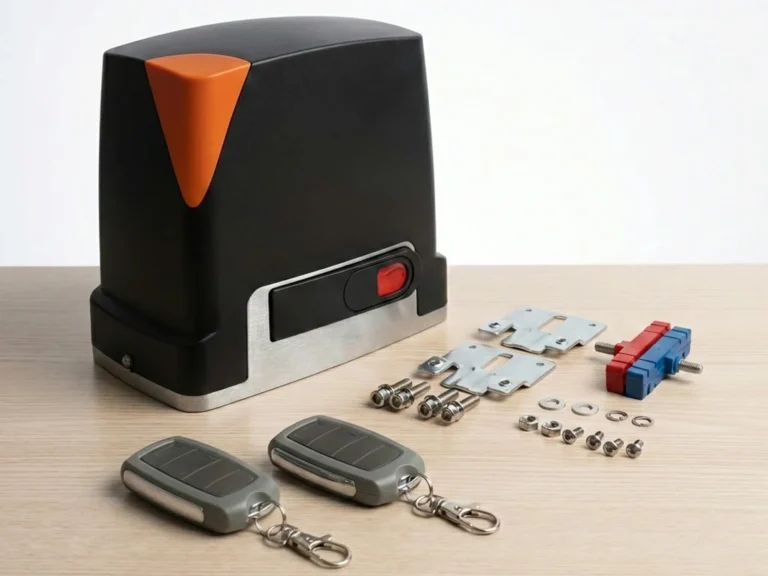
- DC Motors: DC permanent magnet motors are significantly more compact and power-dense. They offer a much better power-to-size ratio, allowing for sleeker, more aesthetic gate opener designs.
The Transformer Factor: It is important to note a key structural addition in DC systems: the transformer. Since DC motors operate on low voltage (typically 12V or 24V DC), the gate opener control box must include a transformer to step down the high-voltage mains power. While this adds a component, the overall system footprint often remains smaller than bulky AC alternatives.
2. The Price Advantage: Competitiveness in Manufacturing
In today’s competitive B2B landscape, cost is paramount. Historically, AC motors were considered simpler and cheaper to build. However, the dynamics have flipped.
Advancements in manufacturing and permanent magnet materials have made DC motors more cost-competitive. Even with the inclusion of the necessary transformer, a complete DC gate opener system often holds a price advantage over its AC counterpart. This allows distributors to offer modern solutions while maintaining healthy margins.
3. Functionality and Debugging: An Installer’s Dream
For the technician in the field, the difference between AC and DC is night and day when it comes to setup and troubleshooting.
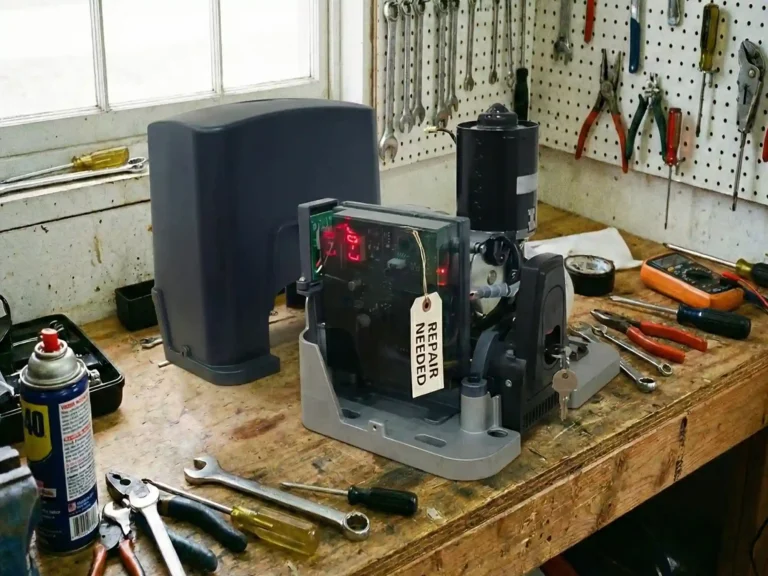
- AC Challenges: Controlling the speed of an AC motor is complex. It typically requires expensive Variable Frequency Drives (VFDs). Without them, AC openers often run at a single speed, making features like “soft-start” and “soft-stop” difficult and jerky to implement. Debugging often involves dealing with high-voltage capacitors and complex wiring.
- DC Simplicity: DC motors are natively easy to control. By simply varying the voltage (usually via Pulse Width Modulation – PWM) on the logic board, we can achieve ultra-smooth acceleration and deceleration. Debugging is far simpler. The low-voltage environment is safer to work with, and modern DC control boards provide clear diagnostics. Adjusting force sensitivity, speed curves, and slowdown points is often as simple as turning a dial or pressing a button, significantly reducing installation time and callbacks.
4. Global Trends: The Inevitable Shift
We must acknowledge that AC gate openers are still widely used globally, particularly in regions with older infrastructure or specific heavy-industrial applications. Their rugged simplicity has kept them relevant.
However, the trajectory is clear. The demand for solar compatibility, battery backup integration (which is effortless with native DC systems), smart home connectivity, and safer low-voltage operation is driving the entire industry toward DC.
Conclusion: Partnering for the Future
At ACCESS TECH, our 400+ strong team includes engineers dedicated to refining both technologies. While we continue to support robust AC solutions where needed, our R&D focus is squarely on optimizing the next generation of DC brushless and brushed gate openers.
For distributors looking to stay ahead of the curve, embracing the advantages of DC technology—compact size, cost competitiveness, and ease of installation—is the logical step forward.
Are you ready to update your catalog with high-performance DC gate openers? Contact the ACCESS TECH team today.